
Scarf Dressing: How to Style a Silk Scarf

A silk scarf can define an entire look, not simply finish it. Tie it at the neck, drape it as a layer or style it as a top or belt to change the silhouette.
What is scarf dressing? A new definition of a classic accessory
Scarf dressing is a styling method in which a scarf functions as a full-fledged wardrobe item, redefining the role of a silk scarf. It can organize proportions, build layers, or completely replace other elements, such as a top or a belt. The fundamental difference lies in the intention. Classic scarf-wearing is based on the aesthetic finishing of an outfit. Scarf dressing begins earlier, at the conceptual stage.
Why are scarves making a comeback? A trend that combines nostalgia with modernity
Scarves are returning to fashion because they combine two strong currents: a return to classics and the need for individual style interpretation. On the one hand, they are rooted in fashion history, just think of silk carré or iconic styles from the 50s and 60s. On the other hand, their form remains open enough to allow for experimentation.
However, contemporary fashion increasingly uses elegance in a less literal way. The Bourgeois aesthetic is about conscious ease, and the scarf fits perfectly into this trend. At the same time, it acts as a tool for personalization. It can be tied, draped, and its function changed. This is also visible on the streets. The growing interest in silk scarves, especially in vintage and resale circulation, confirms their return as a styling element, and not just a classic accessory.
Scarf dressing on the 2026 runways – how designers are redefining the scarf?
Scarf dressing on the 2026 runways shows that a scarf can serve a constructive and conceptual function in styling. Different fashion houses interpret this trend according to their own rules, but the common denominator remains the same. The scarf acts as a structural element. At Celine, it becomes part of the silhouette's construction – draped over the shoulder, sewn into the form, or draped to influence proportions. At Miu Miu, it functions more subtly, hidden under layers, partially visible, creating an effect of controlled imperfection. Ferragamo foregoes classic belts, replacing them with soft, tied scarves that change the character of the entire outfit. At Dries Van Noten, the scarf appears as a pareo worn over trousers, breaking formality and introducing a new rhythm to the silhouette. This way of thinking about the scarf fits into the broader aesthetic of the season. Silhouettes lose their stiffness in favor of fluidity, asymmetry replaces predictability, and tailoring becomes softer and less obvious. Materials begin to work with the body. The scarf, as a light and flexible element, naturally introduces movement, irregularity, and subtle tension.

Photo: Courtesy of Dries Van Noten / Daniele Oberrauch / Gorunway.com


![]() Scarf dressing in practice – 7 styling tips worth knowing
Scarf dressing in practice – 7 styling tips worth knowing
Scarf dressing can be implemented in many ways, both minimalist and maximalist, nonchalant and expressive. Here are some reliable and unconventional suggestions!
Scarf as a top
The simplest form of reinterpretation is using a scarf as a top. A halter, bandeau, or asymmetrical tie allows for creating a minimalist but effective top for the outfit.
Scarf as a dress (scarf dress)
A scarf can become a dress, both in a designer version and DIY. It works best in summer and evening styles, where the lightness of the material benefits the entire look.
Scarf as a belt
Instead of a classic belt, you can use a scarf, which introduces color and softness. This solution works well in simple, minimalist sets.
Scarf as a layer (layering trick)
A scarf worn under a shirt, sweater, or blazer adds depth to the styling. Even a small piece of fabric can change the perception of the entire look.
Scarf as a pareo / skirt
A scarf tied around the hips can function as a skirt or an additional layer. A great solution if you want to combine urban aesthetics with vacation freedom.
Scarf in hair
A classic, a scarf worn in the hair, refers to retro aesthetics but in a modern way. A safe option for those who want to subtly introduce the trend into their wardrobe.
Scarf on a handbag
A scarf tied to a handbag acts as a personalization element. Although this is the least binding form of scarf dressing, it still allows you to easily make the entire look more expressive.
Scarf dress – what is it and how to wear it?
A scarf dress is a dress inspired by or made directly from a scarf.
In the first case, we are dealing with a design that contains an element resembling a scarf, e.g., a tie at the neck, often simply called a scarf dress. In the second, the scarf becomes the basic material for the entire form. The differences in application are clear. Designer models work well in more formal situations, while DIY versions are casual and seasonal. Materials are very important. Silk and chiffon provide lightness but require proper tying. Cotton and linen are more stable and practical for everyday wear.




How to style a scarf dress to look good?
A scarf dress looks best when the entire outfit is well thought out and based on conscious choices.
What to pay attention to?
-
Opt for tonal combinations. The most refined effect is achieved by using one color in different shades. Contrasts are more demanding because they can easily disturb the coherence of the styling.
-
Control the proportions of the silhouette. If the scarf dress creates volume in the upper part (e.g., at the neck or shoulders), the bottom should be more orderly. A straight line balances the softness of the form.
-
Pay attention to the movement of the material. A scarf dress works in motion, so it is important that the rest of the outfit is not too visually heavy. Too rigid elements can deprive the whole of its lightness.
-
Combine fabrics with similar characteristics. Silk looks best with other light materials, such as satin or thin cotton. Heavier structures require a more balanced combination.
-
Limit the number of additional accents. The scarf dress itself is a distinctive element; the fewer competing details, the more luxurious the effect.

Check out the products from the photo! [1. Splash Bubbles BL Beads ]
Jewelry for scarf dressing – what not to do and what works best?
Jewelry in scarf dressing should emphasize the styling and work with its lines, rather than compete with the scarf, which is its central point.
The biggest challenge is the neck area, because that's where the scarf builds volume and attracts attention, so the selection of accessories requires greater selectivity.
How to choose jewelry for scarf dressing?
-
Avoid necklaces around the neck. Chokers, short chains, or elaborate necklaces collide with the scarf and disrupt the neckline. The effect becomes visually heavy and less orderly.
-
Focus on earrings as the main accent. Hoop earrings (from thin to oversized), long drop models, statement pieces, geometric forms work best.
-
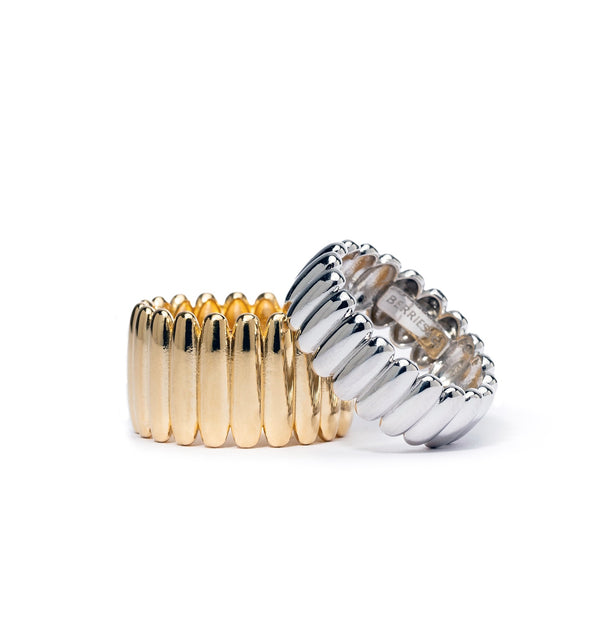
Balance with hand accessories. Bracelets (e.g., rigid bangles, models with natural stones) and rings (both minimalist and larger forms) create a second center of gravity for the styling without interfering with its upper part.
-
Choose one distinct element instead of many small ones. Instead of several subtle accessories, it is better to opt for one stronger accent, e.g., a massive resin bracelet.
-
Maintain the hierarchy of the styling. The scarf should remain the central element of the styling. Jewelry is meant to complement it and enhance the effect.

Check out the products from the photo! VIVA XL Matcha Ring